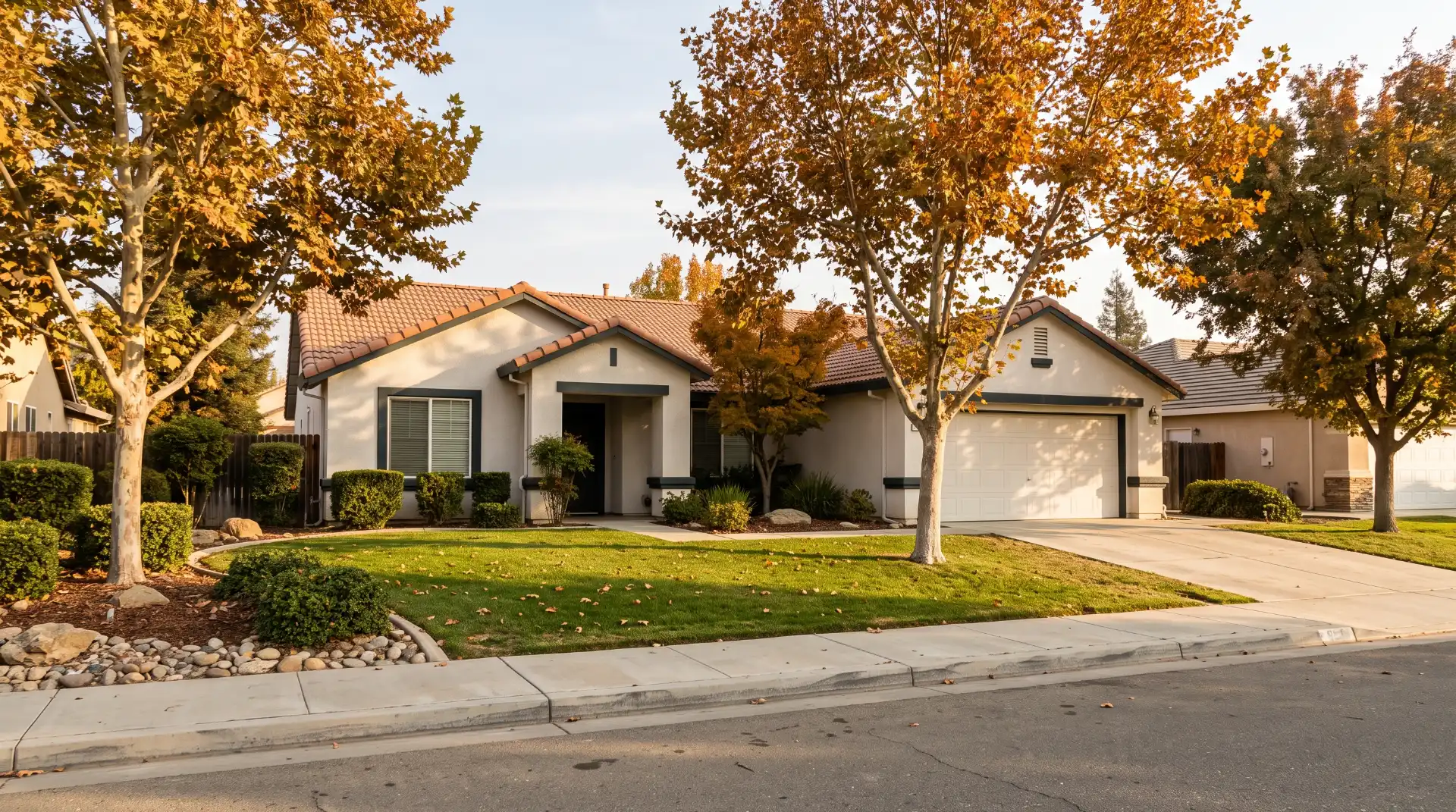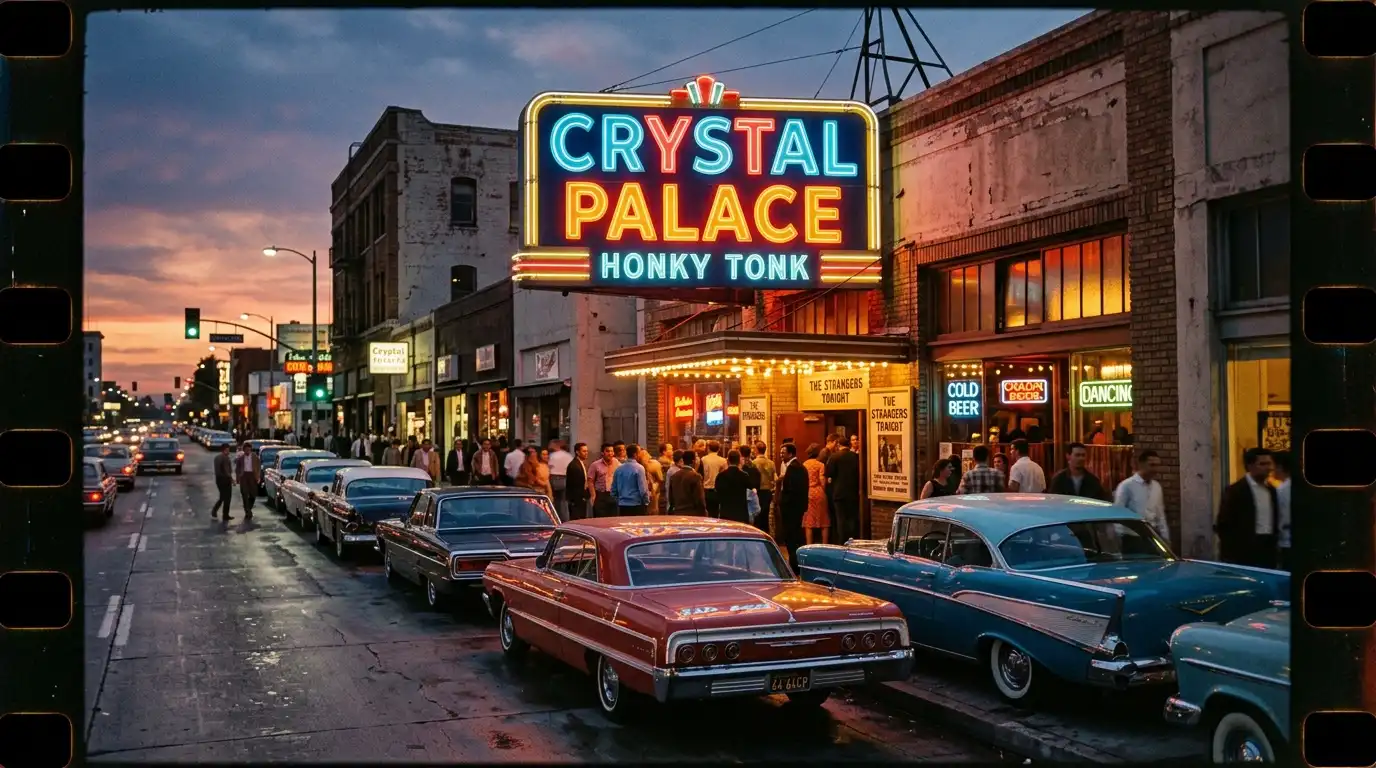
During the 1950s and 1960s, American country music was undergoing a radical transformation. In Nashville, Tennessee, record executives were polishing the genre’s edges, replacing traditional fiddles and steel guitars with lush string arrangements, smooth backing vocals, and refined studio production—a movement known as the “Nashville Sound.” But over 2,000 miles to the west, in the working-class honky-tonks of Kern County, California, a gritty, electric counter-revolution was brewing: The Bakersfield Sound.
Spearheaded by legends like Buck Owens and Merle Haggard, this raw, loud, and rhythmically driven genre didn’t just challenge Nashville’s dominance—it redefined the possibilities of country music forever.
1. Dust Bowl Roots and the Honky-Tonk Crucible
To understand the Bakersfield Sound, one must first look at the economic and social migration that shaped the San Joaquin Valley. During the Great Depression and Dust Bowl crisis of the 1930s, hundreds of thousands of migrants from Oklahoma, Texas, Arkansas, and Kansas traveled west along Route 66, settling in Bakersfield and surrounding Kern County communities to work in agriculture and booming oil fields.
These working-class families brought their musical traditions with them—western swing, mountain ballades, and traditional blue grass. By the late 1940s and early 1950s, after working grueling shifts in fields and oil rigs, oil workers and farm laborers gathered at local dance halls and beer joints along Union Avenue and Chester Avenue.
Because these venues were loud, crowded, and rowdy, acoustic instruments could barely be heard over the clinking glass and chatter. Local musicians adapted by plugging in. They turned up electric guitars, amplified pedal steel instruments, and drove steady, hard-hitting drum beats that could cut straight through noisy crowds.
2. The Sonic DNA: Fender Telecasters and Driving Rhythm
Unlike the orchestral swells favored by Nashville producers, the Bakersfield Sound was lean, bright, and uncompromisingly electric. Key musical elements that defined the signature Bakersfield sonic blueprint included:
- The Fender Telecaster: The solid-body Fender Telecaster electric guitar provided a sharp, cutting, treble-heavy “twang” tone that became the undeniable lead voice of the genre.
- Prominent Pedal Steel Guitar: Played by virtuosos like Tom Brumley and Ralph Mooney, the pedal steel provided bright, stinging fills and expressive sliding bends.
- Driving Drums & High-Hatten Rhythm: While early traditional country often eschewed full drum kits, Bakersfield bands placed drums at the center, driving a prominent 2/4 shuffle beat perfect for two-stepping.
- High-Lonesome Vocal Harmonies: Clear, impassioned lead vocals paired with tight, high-tenor backing harmonies gave the music emotional resonance.
3. Buck Owens: The Pioneer of Electric Twang
Few artists embodied the spirit and business savvy of the Bakersfield Sound more than Buck Owens. Arriving in Bakersfield in 1951, Owens spent years honing his craft playing lead guitar in local bands and recording sessions before stepping into the spotlight with his band, The Buckaroos.
Alongside his brilliant lead guitarist Don Rich, Owens produced a string of 21 number-one Billboard country hits throughout the 1960s, including classics like “Act Naturally,” “Love’s Gonna Live Here,” and “I’ve Got a Tiger By the Tail.” Owens insisted on recording his tracks with minimal studio processing, mimicking the exact punchy, electric mix his fans heard during live dance hall performances.
Owens’ influence extended far beyond record sales. As co-host of the long-running television show Hee Haw and owner of local radio stations and venues like the iconic Buck Owens’ Crystal Palace, he cemented Bakersfield’s status as a major music industry capital.
4. Merle Haggard: The Poet of the Working Class
If Buck Owens gave the Bakersfield Sound its driving bounce and electric sparkle, Merle Haggard gave it its poetic soul and rugged authenticity. Born in Oildale, California, in a converted railroad boxcar, Haggard’s early life was marked by trouble, culminating in a sentence at San Quentin State Prison in the late 1950s.
Upon his release, Haggard returned to Bakersfield, channeling his lived experiences into poignant, plain-spoken songwriting. Backed by his renowned band, The Strangers, Haggard penned immortal anthems of working-class struggle, heartaches, and lawbreaking, including “Mama Tried,” “Sing Me Back Home,” “Silver Wings,” and “Workin’ Man Blues.”
Lyrical Realism
Haggard’s baritone voice and sharp storytelling connected deeply with blue-collar listeners across America. He wrote about prison walls, factory floors, long-haul trucking, and personal regret with an honesty that contrasted sharply with the polished, pop-leaning country ballads coming out of Tennessee.
5. Lasting Legacy and Influence on Rock and Country
The impact of the Bakersfield Sound echoed far beyond Kern County. Its raw energy and electric drive deeply influenced the emerging country-rock movement of the late 1960s and 1970s. Bands like The Byrds, The Flying Burrito Brothers, Creedence Clearwater Revival, and later Dwight Yoakam, The Mavericks, and George Strait explicitly cited Bakersfield as their primary inspiration.
Even rock legends like The Beatles recognized the magic of the Bakersfield Sound, recording a cover of Buck Owens’ “Act Naturally” in 1965 featuring Ringo Starr on lead vocals.
Summary
The Birth of the Bakersfield Sound proved that country music didn’t belong to a single city or executive boardroom. Born out of working-class resilience, noisy honky-tonks, and bright Fender guitars, Buck Owens, Merle Haggard, and their fellow Kern County musicians created an enduring musical tradition whose electric twang still resonates through American music today.